When to aerate and overseed in Maryland.
Late summer into early fall, so new grass is growing before the November frosts.

For a tall fescue lawn
Mid-August to mid-October.
Most Maryland lawns are mainly tall fescue. Aerate first, then overseed.
About 2 weeks
for seed to sprout.
By mid-October
seed should be down, ahead of November frosts.
When should I aerate and overseed my lawn in Maryland?
Aerate and overseed a tall fescue lawn from mid-August to mid-October. Most Maryland lawns are mainly tall fescue. Get the seed down by mid-October. It takes about 2 weeks to sprout, and a killing frost in November can damage young grass.
Source: University of Maryland Extension
After the seed is down.
Water lightly, often
Keep the top inch of soil moist, not soaked.
Skip evening watering
Leaves stay wet overnight, which invites disease.
Ease off later
Once the grass is tall enough to mow, water less often but longer.
Keep people and pets off
For at least a month after sprouting, or until mowed twice.
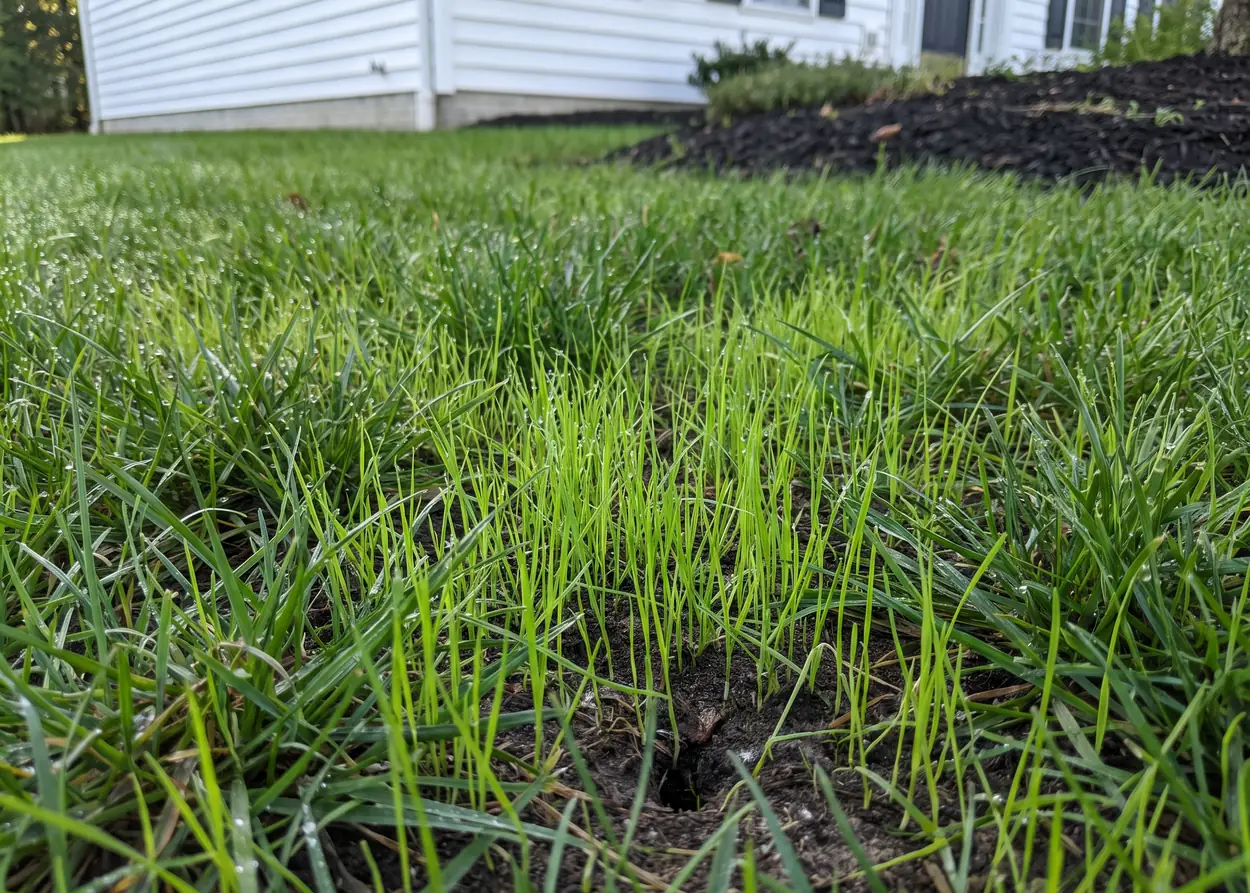
We aerate and overseed lawns.
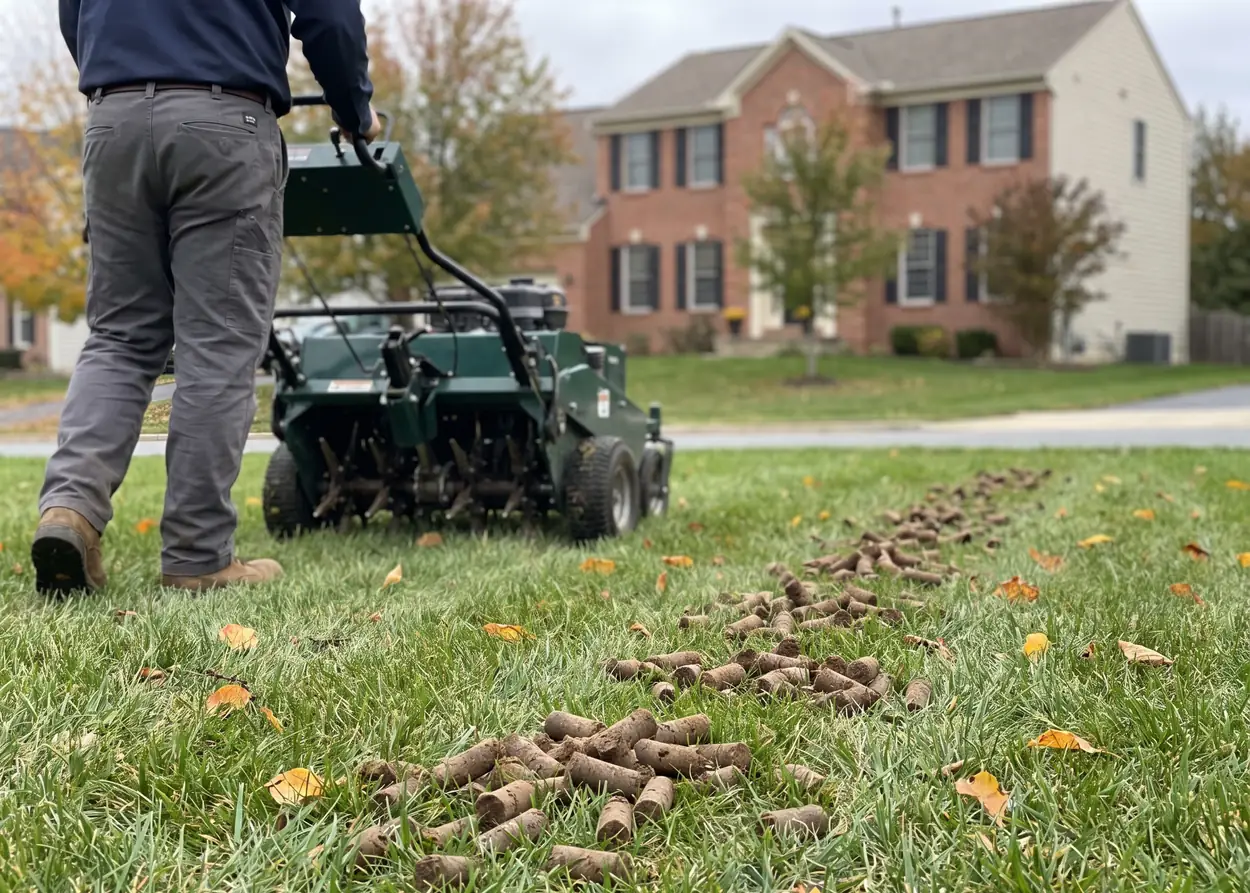
Aeration and overseeding
By itself, or with mowing.
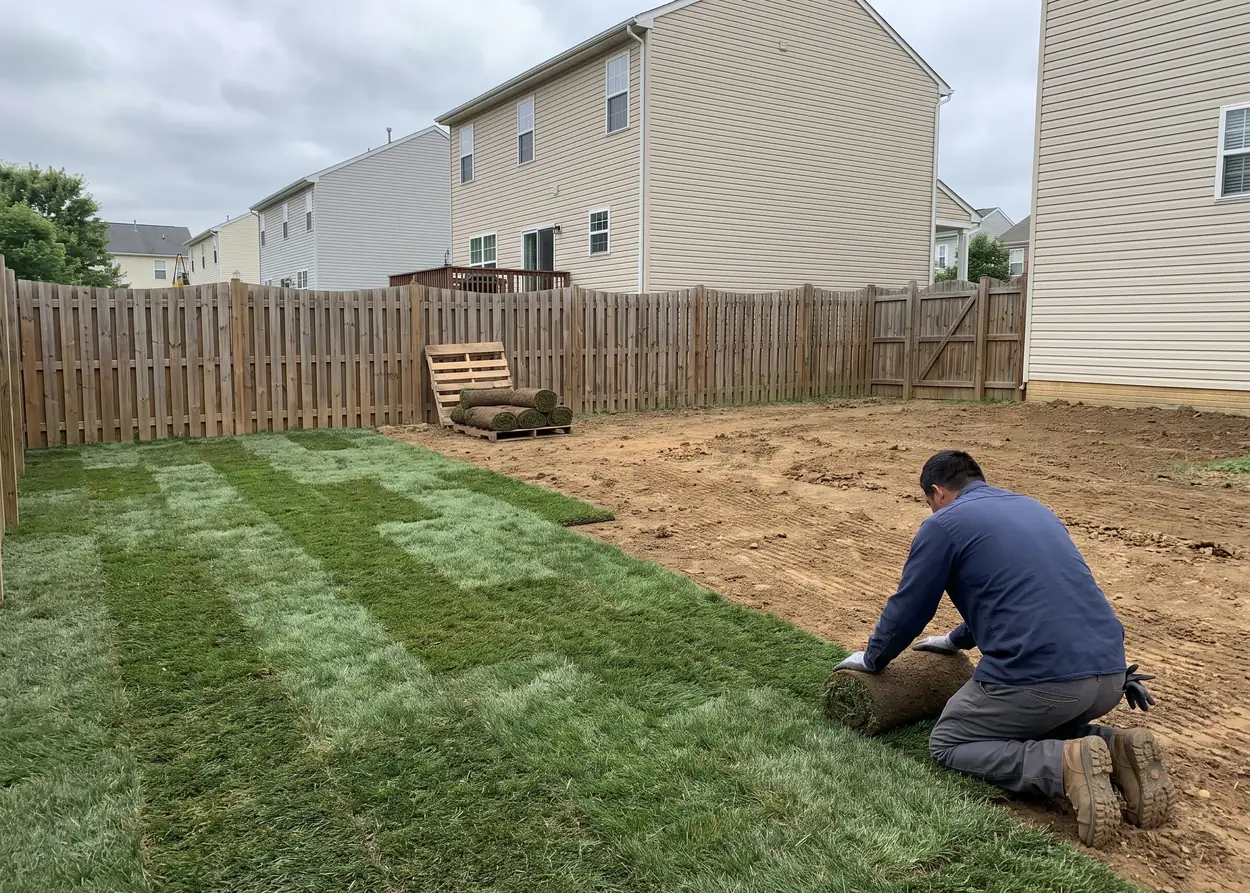
Sod installation
A new lawn, laid as sod.
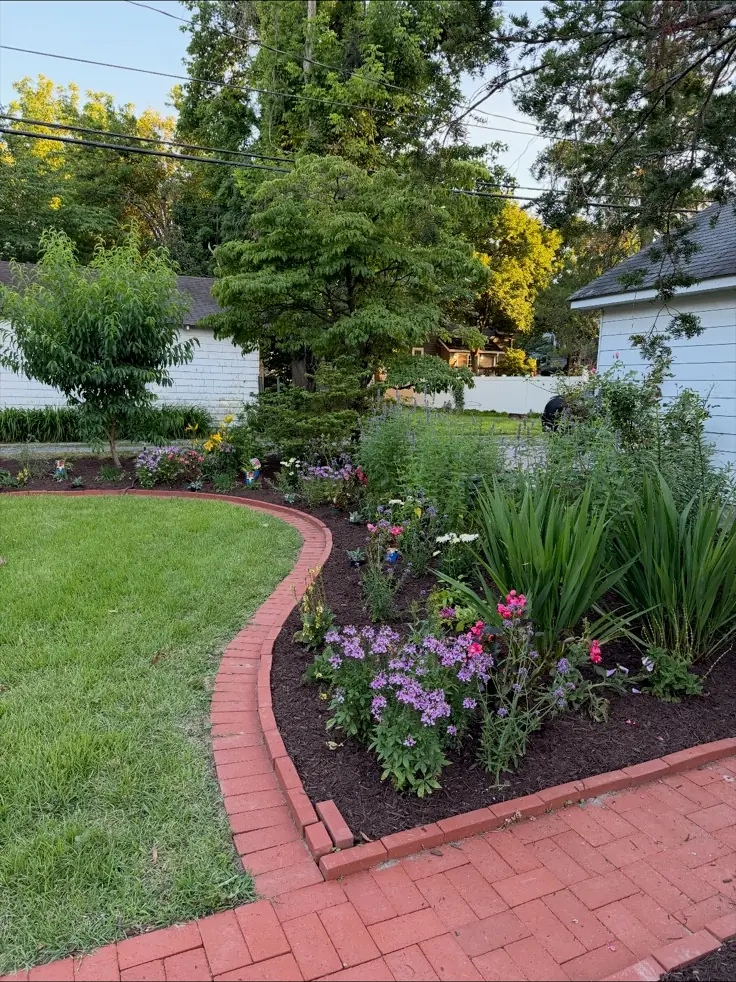
Lawn and landscape care
Mowing, beds and cleanups.
 Guide
GuideMaryland lawn calendar
Mowing, seeding and leaf dates.
Questions
When is it too late to plant grass seed in Maryland?
After mid-October. Seed takes about 2 weeks to come up, and killing frosts in November can hurt young grass. Tall fescue seed sown outside the mid-August to mid-October window can struggle with heat, frost or more weeds.
Can I aerate and overseed in spring or summer?
Spring is possible, but harder than fall. Spring planting runs from March into early April, and grass sown then faces more weeds, the usual reason spring seeding fails. A tall fescue lawn may still need spring overseeding if seed sown in fall did not establish well. In hot, dry summer weather tall fescue goes dormant, and a lawn should be aerated while it is growing.
Do I need to aerate my lawn every year?
Not always. The ideal is once a year in fall, just before seeding. That is especially true where a lawn gets regular foot traffic. Otherwise, every 2 to 3 years should do. It comes down to how quickly the soil packs down and how heavily the lawn is used.
What should I do after aerating and overseeding?
Keep the soil moist. Water new grass lightly and often, so the top inch stays moist but not soaked. For several weeks, seedlings may need watering several times a day. On newly planted ground, people and pets should stay off for at least a month after sprouting.
What does aeration and overseeding do for a lawn?
Together they ease packed soil and thicken thin grass. Core aeration pulls plugs of soil from the lawn. That opens channels for air and water, and the exposed soil helps seed germinate. Fall overseeding fills bare and thin spots in a tall fescue lawn, which helps crowd out weeds.
Get a free estimate.
We work across Anne Arundel County and Kent Island. Estimates are free, so ask us about timing for your lawn.