New grass seed: how long to water, and when to mow.
A quarter inch of water, several times a day, for the first few weeks. The first mow usually comes at 4 to 6 weeks, when the grass reaches 4 inches.
- Insured
- Locally owned
- Free estimates
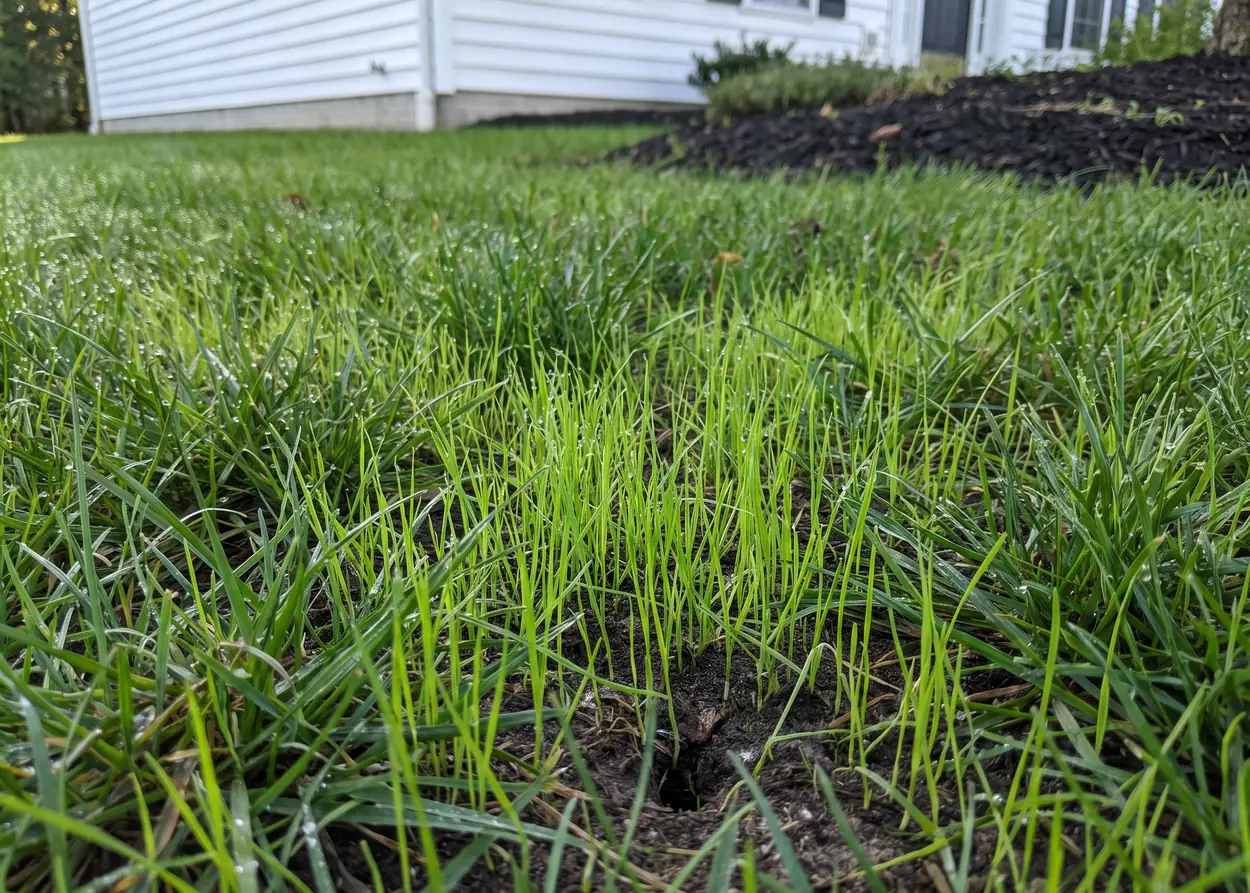
The first six weeks.
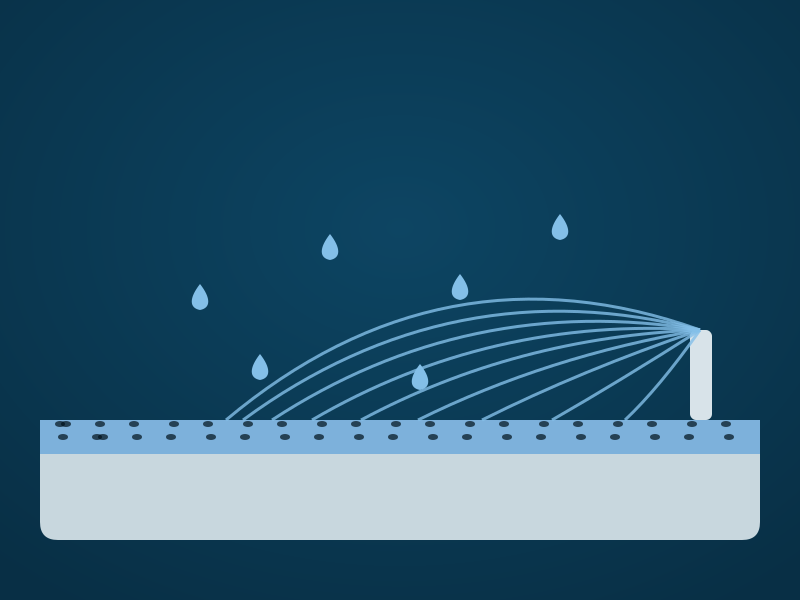
Weeks 1 and 2: keep the top inch moist.
A quarter inch of water at a time, several times a day on dry days, never a soaking. Tall fescue comes up in 7 to 14 days.
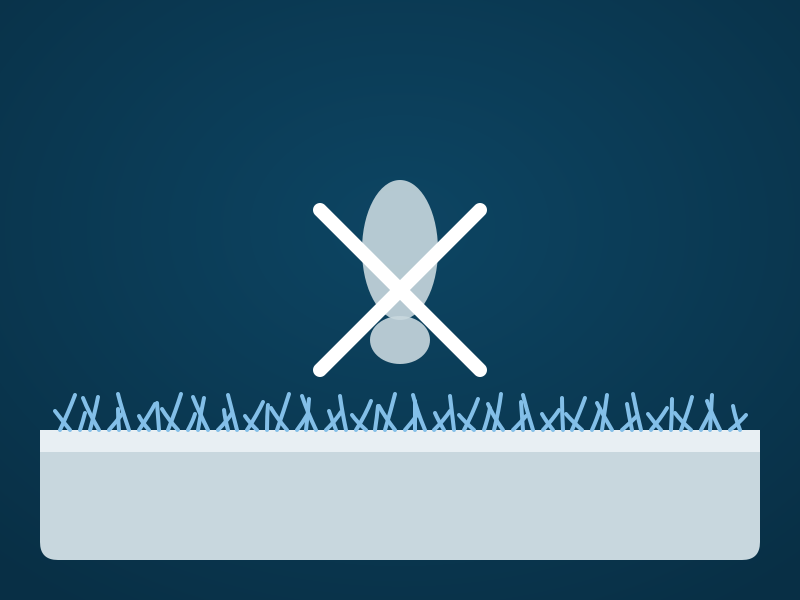
Week 3: still light, still often.
Seedlings are shallow and dry out fast in wind and low humidity. Keep feet and paws off.
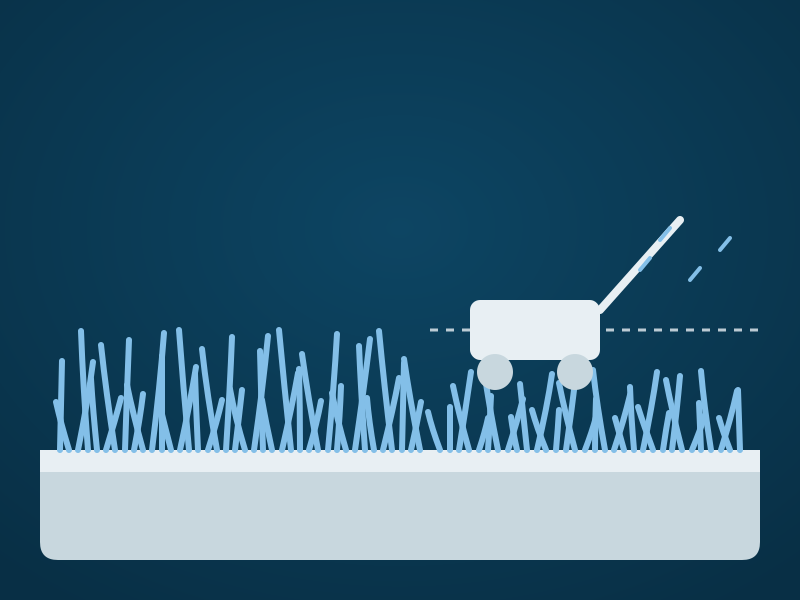
Weeks 4 to 6: the first mow, then deeper water.
Mow at 4 inches down to 3 with a sharp blade, then water less often and longer, working up to an inch at a time.
How long do you have to water new grass seed?
Lightly and often for several weeks: about a quarter inch each time, several times a day in dry weather, so the top inch of soil stays moist. Tall fescue sprouts in 7 to 14 days. Once it is tall enough to mow, 4 to 6 weeks in, water deeper and less often. We overseed lawns across Anne Arundel County.
Sources: University of Maryland Extension, Rutgers Cooperative Extension and Penn State Extension. Checked on 11 October 2026.
Before and after the seed.
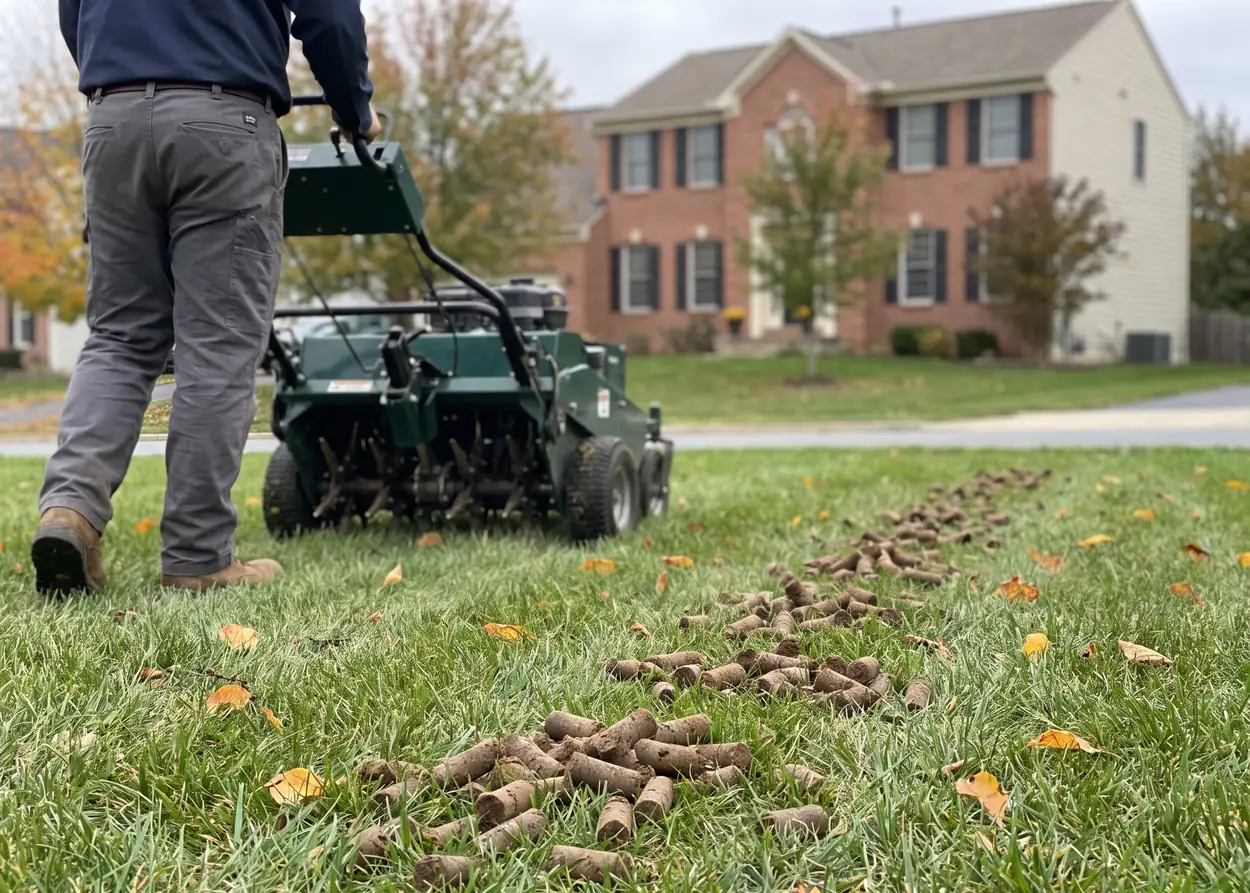
Aeration and overseeding
For a lawn that needs new seed. Estimates are free.
- Guide
Which grass seed suits Maryland
Read the tag before the brand.
-
Mowing height in Maryland
3 to 4 inches for fescue, and the one-third rule.
Questions about new grass
Should I put straw over grass seed?
Yes, a thin layer: about 80 to 100 pounds of clean straw per 1,000 square feet, by University of Maryland Extension's rate, so that soil still shows through. Straw, not hay, which carries weed seed. Stray oats or wheat that sprout from it die off with the first mowings.
Can I cover grass seed with topsoil or compost?
Lightly. Grass seed needs light to germinate, so University of Maryland Extension says no more than about half an inch of soil, or a quarter inch of compost or straw, over it. Raking the seed in is not required, but a light covering improves germination.
What happens if it rains hard right after seeding?
Seed and soil can wash, and water that ponds can suffocate or scald the seedlings. University of Maryland Extension lists erosion, ponding and disease in late spring or summer as the problems of too much water.
When can I stop watering new grass every day?
When the seedlings are tall enough to mow. Then water less often but for longer, letting the surface dry a little between times while the top 4 to 6 inches stay moist. In a mix, wait for the slowest grass: Kentucky bluegrass takes 14 to 21 days to come up against tall fescue's 7 to 14.
Why did my grass seed not come up?
Usually it dried out. The top of the soil dries fastest on windy, dry, warm days, on sandy soil, and on compacted ground that will not take water back in. Old seed, seed buried under more than half an inch of soil, shade, or sowing outside the mid-August to mid-October window are the other common reasons University of Maryland Extension lists.
Get a free estimate.
Send the address and we will quote the job: aeration and overseeding for lawns around Annapolis.