Grass won't grow in shade or under trees.
Count the hours of direct sun. Four is enough for tall fescue, two for fine fescue. Below that, stop fighting the tree.
- Insured
- Locally owned
- Free estimates

Direct sun a lawn needs
4 hours
a day is the least tall fescue needs in the growing season. Fine fescue gets by on 2.
- 6 hours of direct summer sun is where turfgrass does well.
- 2 inches of mulch over the root zone is the answer where grass will not grow under a tree.
Why won't grass grow under my trees?
Too little light, and roots taking the water. Turfgrass wants 6 hours of direct summer sun; tall fescue needs at least 4 and fine fescue at least 2, says University of Maryland Extension. Under a maturing canopy a lawn thins year by year, and fall overseeding helps only so far. We overseed where the light allows, around Annapolis.
Source: University of Maryland Extension, Home and Garden Information Center. Checked on 11 October 2026.
Two outcomes under a tree.
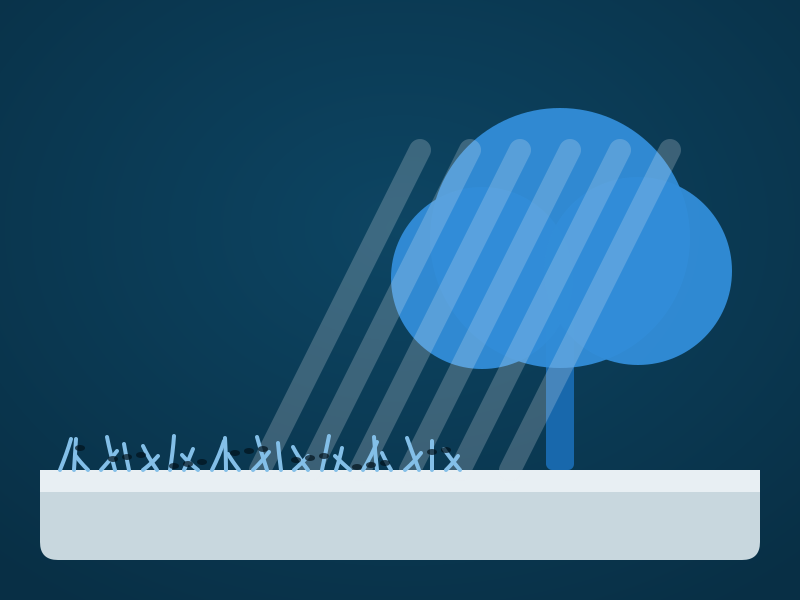
Four hours or more: seed it.
Overseed each fall with tall fescue, hard fescue in the mix for the shadiest edge. Expect each year's seedlings to fade a little sooner.
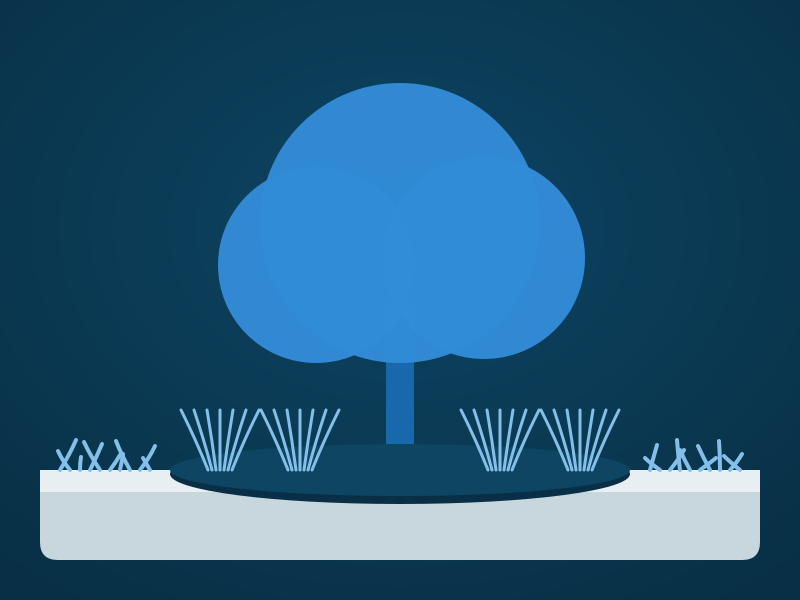
Under four hours: give the ground up.
A 2 inch layer of mulch over the root zone, or sedges and native groundcovers that take shade. Pine needles can simply stay.
Where the light allows.
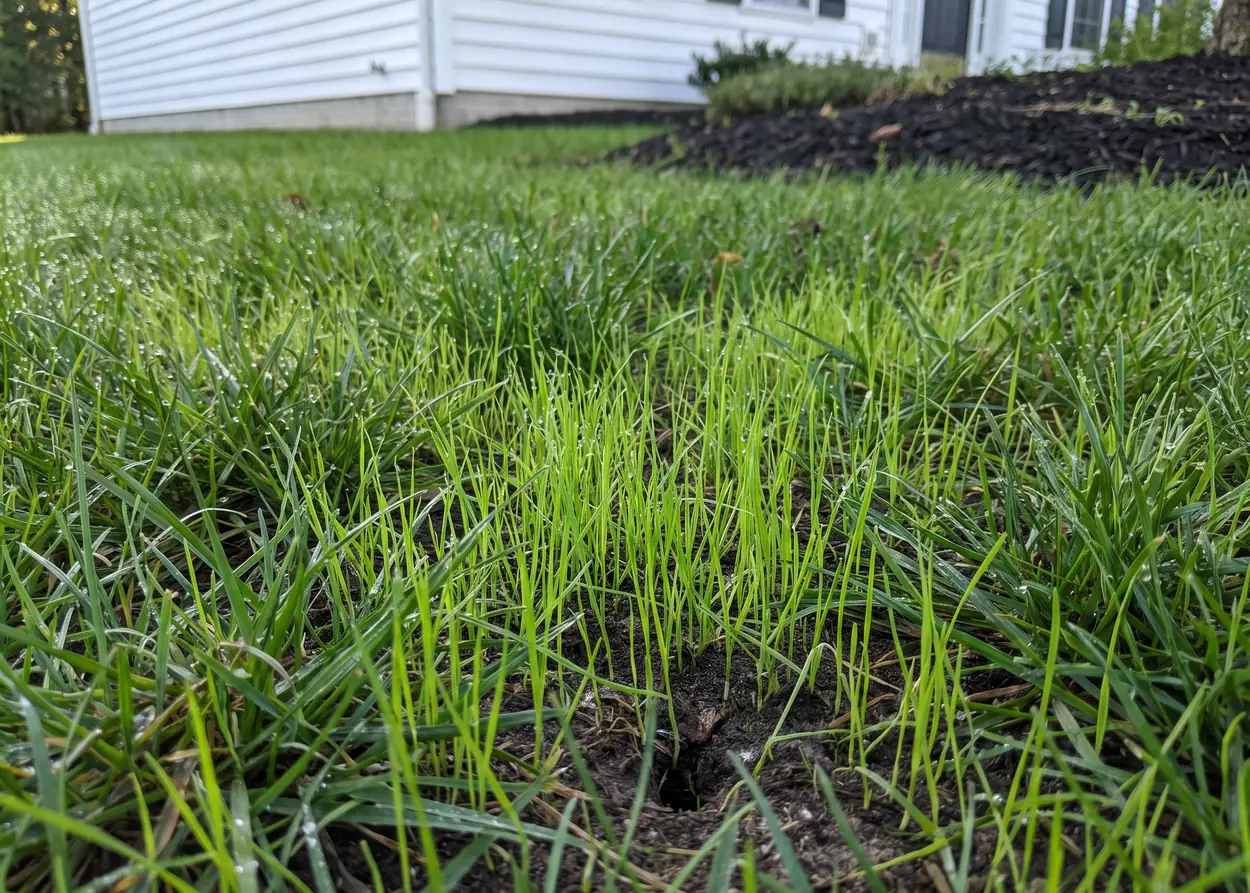
Aeration and overseeding
For the parts of the lawn that get their sun.
- Guide
Thin or patchy lawn
Why fescue cannot close its own gaps.
-
Which grass seed suits Maryland
Tall fescue, fine fescue and the tag.
Questions about shady lawns
Which grass seed grows in shade in Maryland?
Fine fescue, and tall fescue where there is a little more light. University of Maryland Extension calls them the two most shade-tolerant turfgrasses: tall fescue tolerates moderate, dappled shade, among the fine fescues Chewings fescue is the most shade-tolerant, and hard fescue is the one that performs strongest in Maryland. Fine fescue takes little foot traffic and should not be mown as often.
How do I count the hours of sun a spot gets?
Watch it through a day after the trees have leafed out, and note when direct sun lands on the grass and when it leaves. University of Maryland Extension says to track the light over a few days in the growing season.
Can I cut tree branches to get more sun on the lawn?
Carefully, and not by much. Pruning creates wounds that risk decay, removed branches may not regrow under the upper canopy, and the house loses summer shade. University of Maryland Extension says to use an arborist where possible and to remove no more than a quarter of the canopy in any year.
What can I plant where grass won't grow under a tree?
Sedges and shade groundcovers, or just mulch. University of Maryland Extension suggests Pennsylvania sedge or bottlebrush grass for shady sites, and a mix of native woodland perennials around a tree's base in place of mulch. A 2 inch layer of organic mulch over the root zone also protects the soil and keeps mowers and trimmers off the trunk.
Do tree roots stop grass from growing?
They compete for it. Tree roots take moisture and nutrients from the top of the soil and the canopy blocks rain, so the grass beneath runs dry first. University of Maryland Extension says irrigation can help but is not a sustainable fix, because it does nothing about the missing sunlight.
Get a free estimate.
Tell us which parts of the yard sit under trees. We aerate and overseed lawns from Annapolis to Kent Island.