Hard, compacted or new-build soil under the lawn.
Packed soil has no room for air, water or roots. Two tests tell you how bad it is, and fall is when it gets fixed.
- Insured
- Locally owned
- Free estimates
Two tests for packed soil.
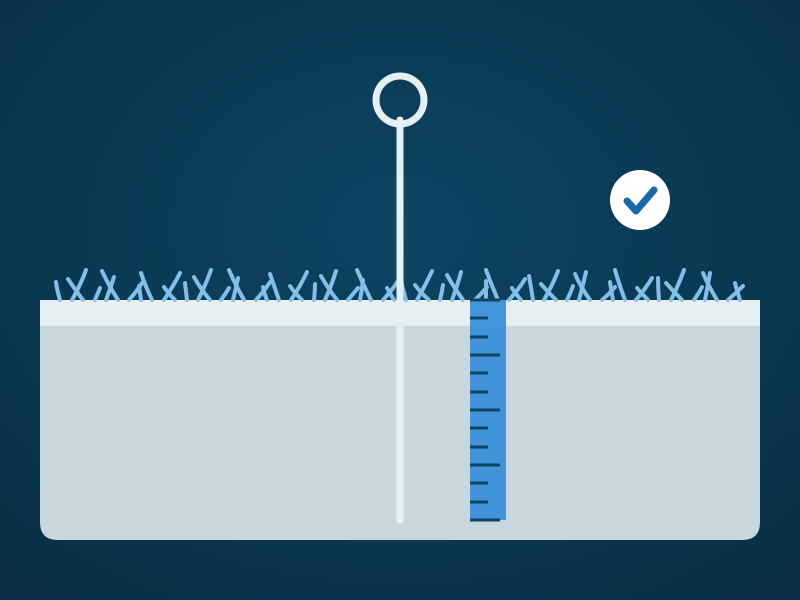
The wire test.
A few days after rain, a stiff steel wire should push about 12 inches into the soil without bending. Stopping short means packed ground.

The bucket test.
Dig a hole 12 inches deep and wide, fill it, and fill it again a day later. It should empty in eight hours. Under an inch an hour is too slow: compaction, heavy clay, buried debris or a high water table can all be the cause.
How do you fix compacted soil in a lawn?
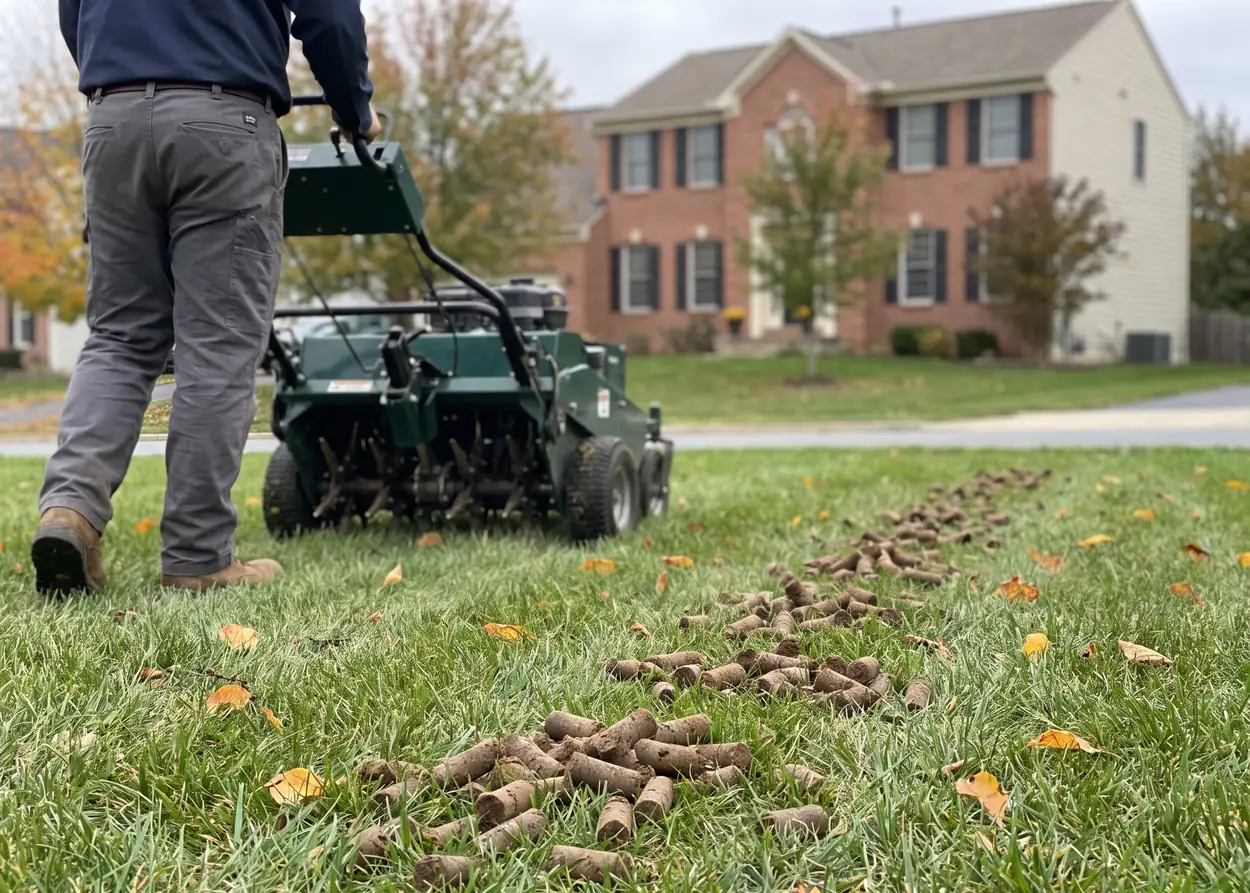
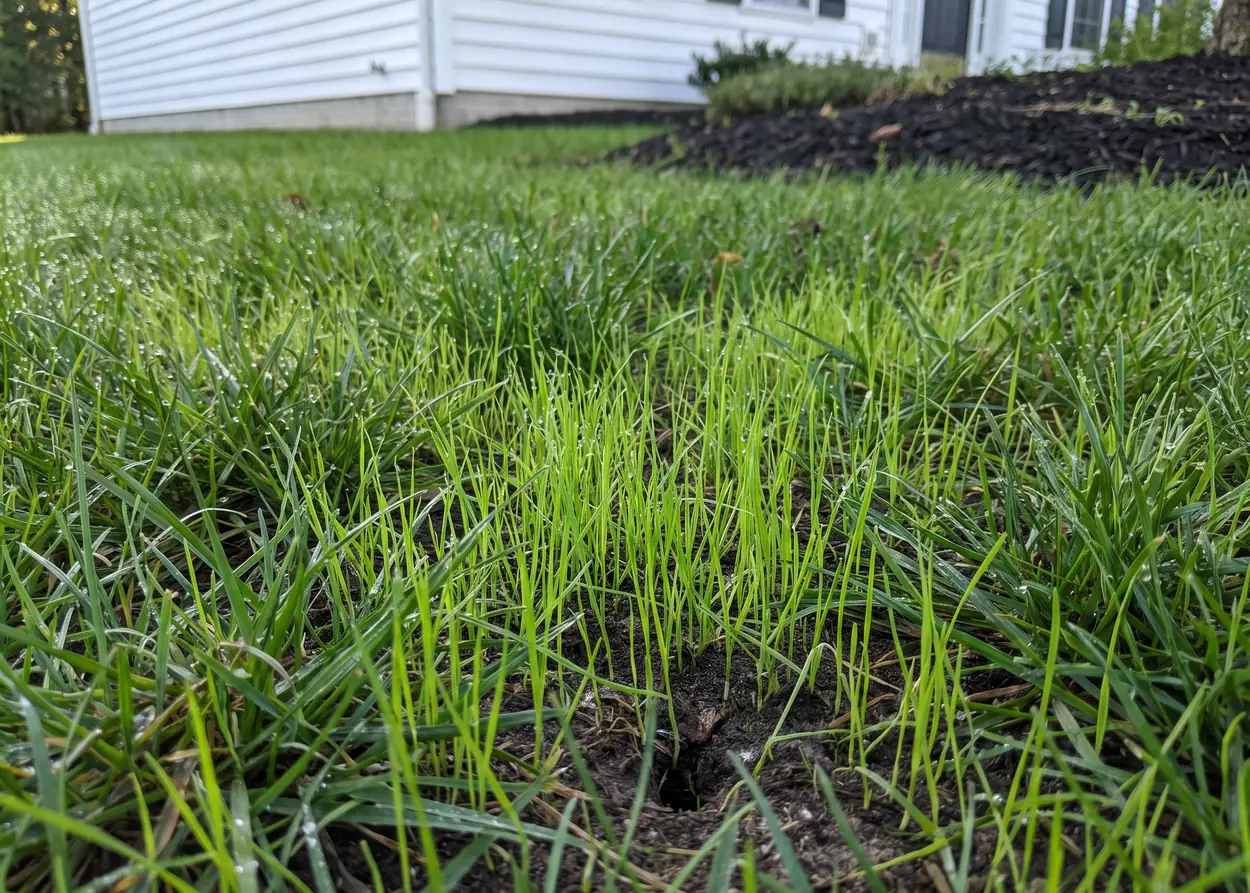
Core aeration in fall, which pulls plugs 2 to 4 inches deep and opens the soil for air, water and seed, then overseeding. Where a test shows under 3 percent organic matter, compost goes in first. Aeration relieves packing; it cannot change a soil that is more than a third clay. We aerate and overseed lawns across Anne Arundel County.
Source: University of Maryland Extension soil and lawn pages. Checked on 11 October 2026.
What a new house does to the ground
4 to 8 in
of topsoil, where the roots, organic matter and soil life live, is what construction typically scrapes off.
- 3% organic matter is the line below which compost goes in before seeding.
- One third clay is where a soil turns sticky when wet and brick-hard when dry.
Opening the soil up.
Aeration and overseeding
For a lawn on packed ground. Estimates are free.
- Guide
Standing water in your yard
When packed soil is not the only reason.
-
Thin or patchy lawn
Five things that open a gap in fescue.
Questions about hard soil
Does aeration fix clay soil?
No. Aeration eases compaction, the squeezing together of soil particles, which is a separate problem from texture. The share of clay in a soil cannot be changed, University of Maryland Extension says, only its structure, by adding organic matter over time. Past about one third clay, the soil stays sticky when wet and hard when dry.
Why is the soil in my new house's yard so hard?
Construction. University of Maryland Extension says topsoil is typically removed during building, the soil layers get inverted or mixed, and low-quality fill is often added, all of it compacted by heavy equipment. Buried debris in the fill then blocks roots that would otherwise reach 6 to 8 inches down.
Will adding sand loosen clay?
Fine sand makes it worse, by filling the pore space and slowing drainage further. Only coarse builder's sand at 50 percent or more by volume changes a clay soil, and University of Maryland Extension suggests that only for small areas around chosen plants, not a lawn.
What do aeration plugs look like, and how long do they stay?
Soil cores about half an inch to three quarters wide and 2 to 4 inches long, spaced 2 to 6 inches apart on the lawn. They break down in a couple of weeks. Solid-tine spikers that press holes without pulling a plug are avoided, because they add to compaction.
Is it a good idea to till a compacted lawn?
Only as part of starting over, and only on soil dry enough to crumble when a handful is squeezed. University of Maryland Extension says never to dig, rototill or even walk on soil when it is wet, because that is what packs it. A rototiller mixing compost 4 to 6 inches deep belongs to a lawn renovation, not to an established lawn.
Get a free estimate.
Say whether the house is new and where the lawn struggles. Aeration and overseeding estimates are free.